functions are reusable chunks of code to performa a particular task. Swift and Apple give us some funcs, but we can allso write our own.
methods - functions defined in a Type, including standard Types, and in Structs and Classes. Most Swift types have several of their own methods (e.g. the .append() method, available to any array).
- functions help to organize your code
- functions make it easy to reuse code
- functions make your programs smaller and more efficient
- and make your programs easier to maintain
You give a function a name that identifies what it does, and this name is used to “call” the function to perform its task when needed.
function without parameter
//Fuction definition

func functionName() {
		//code
}

// Function call
functionName()
function with parameter
func rollSidedDice(diceSides: Int) {
	print("You rolled a \(Int.random(in: 1...diceSides)) on a \(diceSides) -sided dice.")
}
example
**import** UIKit


**func** rollSeveralDice(numberOfDice: Int, diceSides: Int) {

    **guard** numberOfDice > 0 **else** {

        print(" Cannot calculate roll of \(numberOfDice) dice")

        **return**

    }

    **var** total = 0

    **var** roll: Int

    **var** totalString = ""

    total = Int.random(in: 1...diceSides)

    totalString = "\(total)"

    **if** numberOfDice > 1 {

        **for** _ **in** 2...numberOfDice {

            roll = Int.random(in: 1...diceSides)

            total = total + roll

            totalString = totalString + ", \(roll)"

        }

        print(totalString)

        print("Total roll: \(total)")

    }

}


rollSeveralDice(numberOfDice: 0, diceSides: 8)
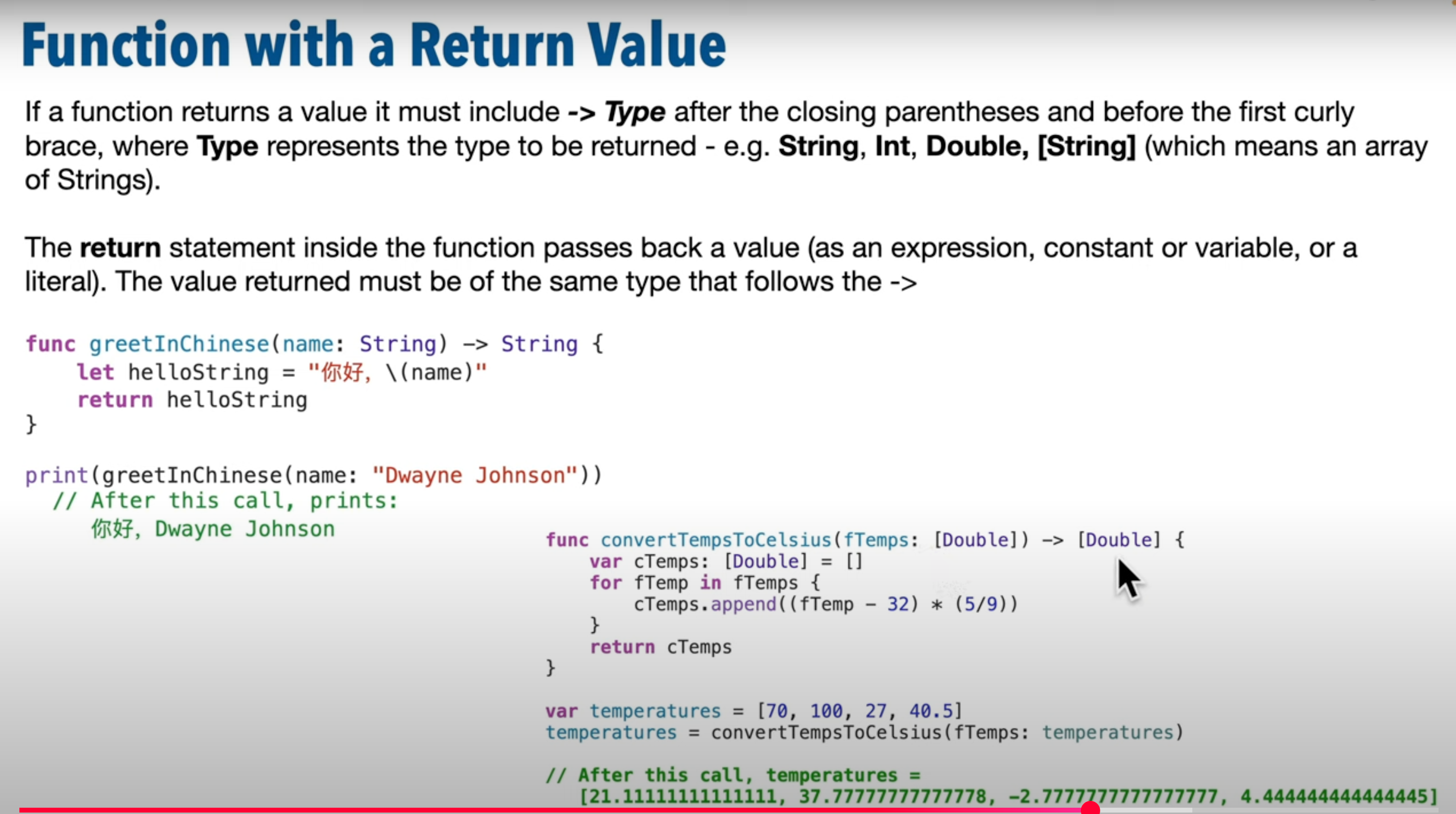
function with return
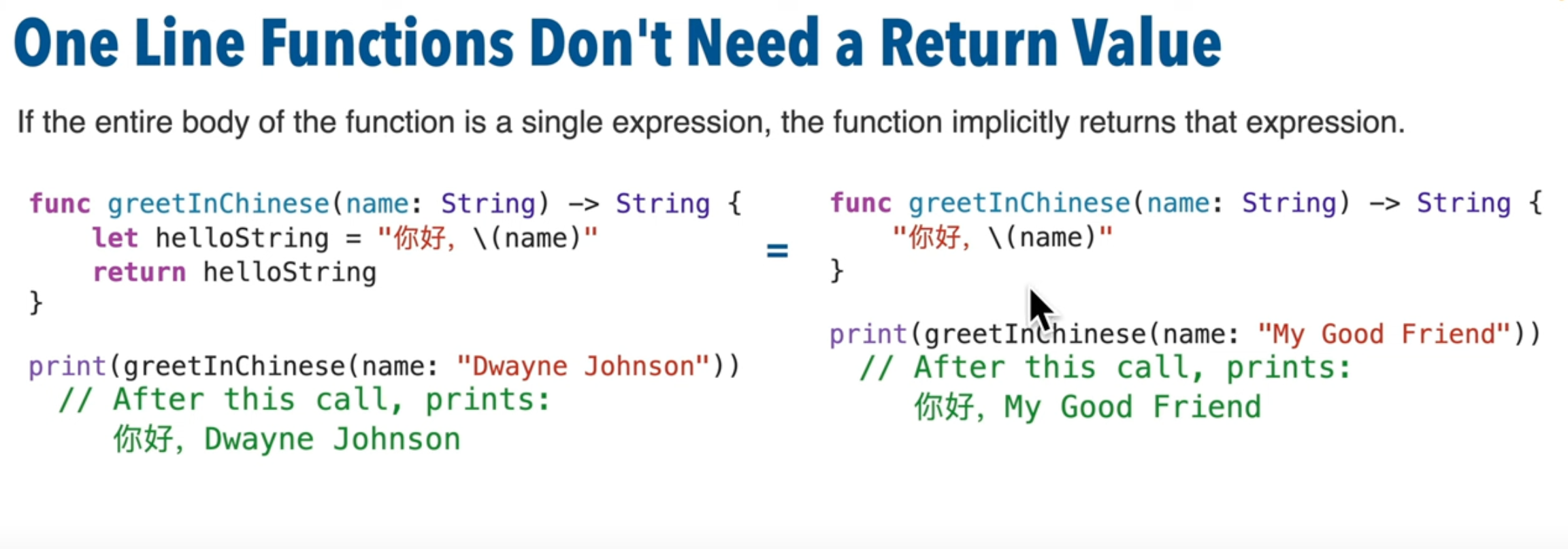
one line functions dont need a return value
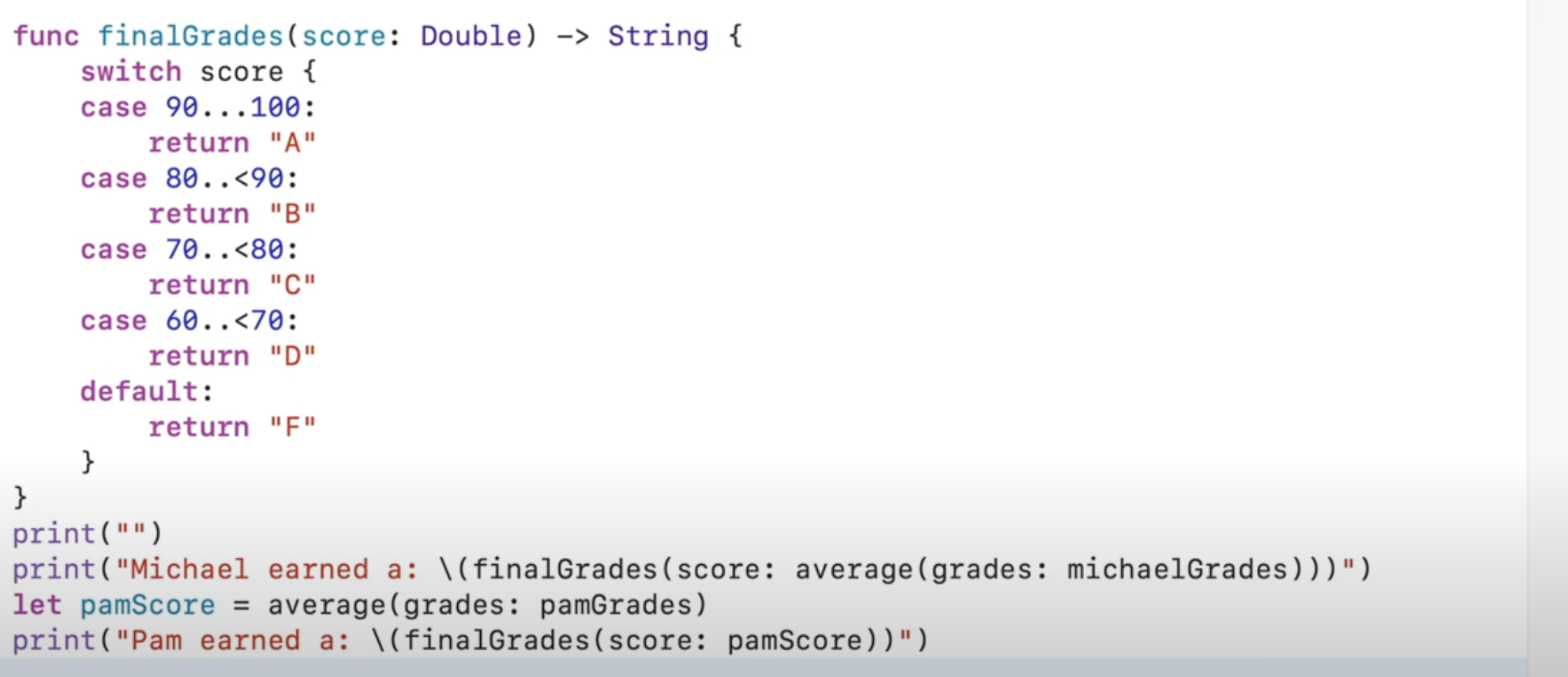
example switch case